

Hand Tools: Use Them Safely
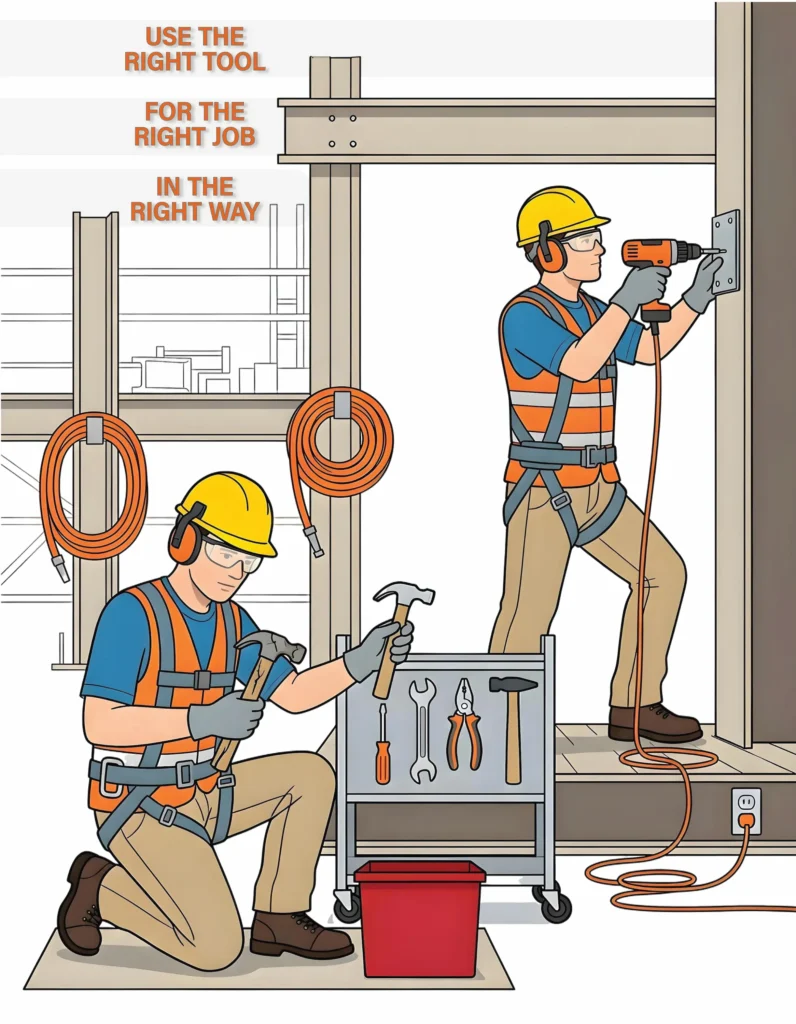
Choose the right tool. Check it first. Use it safely.
Hand tools are used every day on construction sites, from hammers and screwdrivers to pliers, chisels and cutting tools. Because they are so familiar, their risks can easily be overlooked.
A loose hammerhead, a cracked handle or a blade used incorrectly can cause injuries to the user and nearby workers. Safe tool use begins before the task starts.
Choose the Right Tool for the Job
A tool should match the task, the material and the working conditions.
- Select the correct type and size of tool.
- Never use makeshift objects as substitutes for proper tools.
- Do not use screwdrivers as chisels or pliers as hammers unless the tool is specifically designed for that purpose.
- Use tools designed for the relevant environment when electrical or other special hazards are present.
- Make sure you understand the tool’s intended use before starting.
The wrong tool can slip, break or require excessive force, making an otherwise simple task dangerous.
Inspect Before Use
A tool may look usable at first glance but still have defects that make it unsafe.
Check for:
- Cracked, split or loose handles.
- Loose hammerheads or other poorly secured parts.
- Bent, broken or excessively worn components.
- Damaged cutting edges or defective locking mechanisms.
- Damaged insulation on tools designed for electrical work.
Do not use a defective tool. Remove it from service, label or isolate it as appropriate, and report it to the responsible supervisor so it cannot be used accidentally.

Use Tools With Control
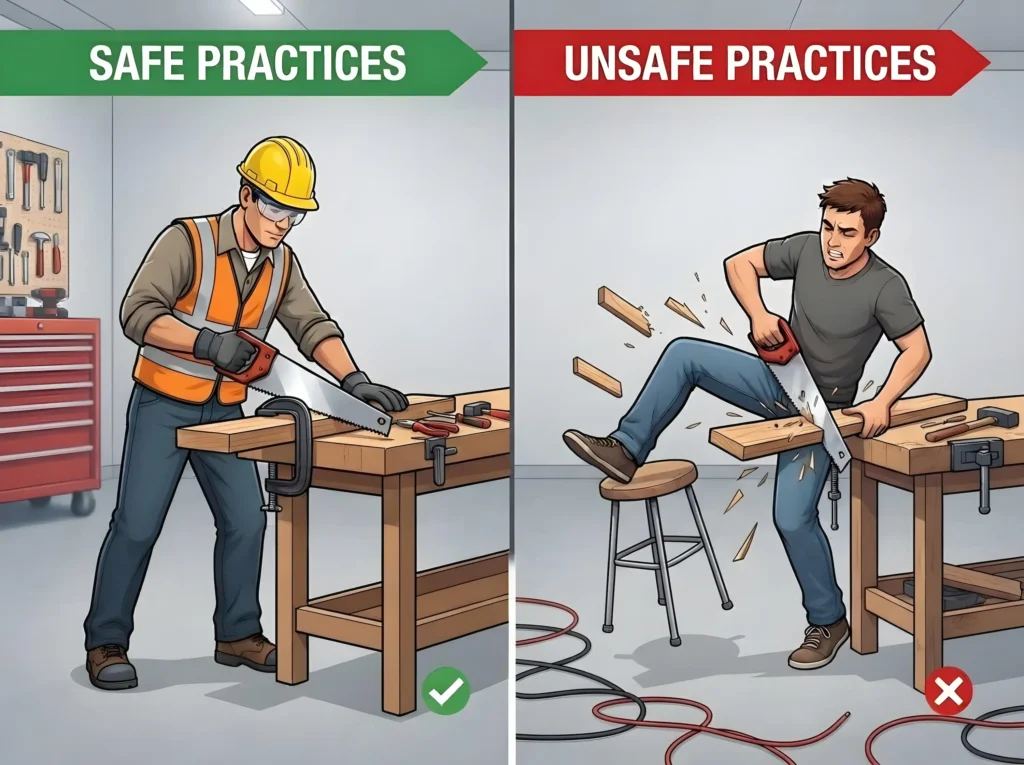
Correct tools can still cause injuries when handled carelessly.
- Follow the correct method for the task.
- Keep hands and fingers away from striking and cutting areas.
- Maintain stable footing and a suitable working position.
- Secure the material being worked on where appropriate.
- Use task-appropriate PPE, such as eye protection when flying particles are possible.
- Stop if the tool slips, becomes difficult to control or shows signs of failure.
Never use excessive force to compensate for the wrong tool or an unsuitable working position.
For work involving electrical hazards, follow the required isolation procedures. Insulated tools must be suitable for the task and do not replace making the electrical system safe.
Remember : A tool should make the task safer and more controlled, not create a new hazard.
Store Tools Properly
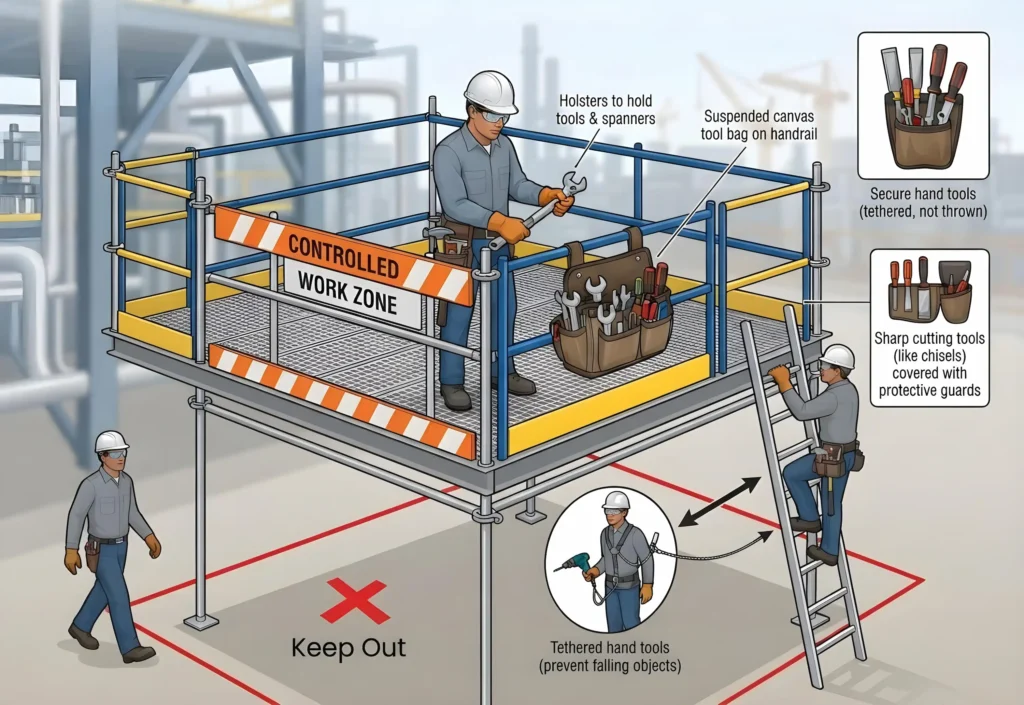
After use, clean and return tools to their designated storage locations, following the manufacturer’s instructions.
Keep sharp tools protected, separate defective equipment from usable tools, and avoid leaving tools on walkways or work surfaces where they can cause trips or injuries.
Good storage also helps workers identify missing, damaged or misplaced tools before the next task begins.
Quick Hand Tool Safety Check
☐ Is this the correct tool for the task?
☐ Is it free from visible damage?
☐ Do I know how to use it safely?
☐ Am I wearing the required PPE?
☐ Are nearby workers protected from the task?
☐ Can I transport and store the tool safely?
The wrong tool, a damaged handle or careless use can turn a routine task into an injury.
Choose suitable tools, check their condition and handle them with care.
CHOOSE THE RIGHT TOOL. USE IT SAFELY.
CONSTRUCTION WORKERS SAFETY
Learn | Prevent | Protect