A construction site can look normal while hiding serious hazards. Learning to recognize what could cause harm is the first step toward preventing accidents.
What Is a Hazard?
A hazard is anything that has the potential to cause harm.
On a construction site, hazards can come from:
People and unsafe actions
Tools and machinery
Materials
Electricity
The work environment
Know What to Look For
Some hazards are obvious. Others are easy to miss. Look for:
Falls : Open edges, floor openings and unsafe access
Falling Objects : Loose materials, tools and suspended loads
Moving Equipment : Vehicles, machinery and blind spots
Electrical Hazards : Damaged cables, exposed wires and unsafe connections
Fire & Chemical Hazards : Flammable materials, hot work, fumes and chemicals
Environmental Hazards : Dust, noise, heat and poor lighting
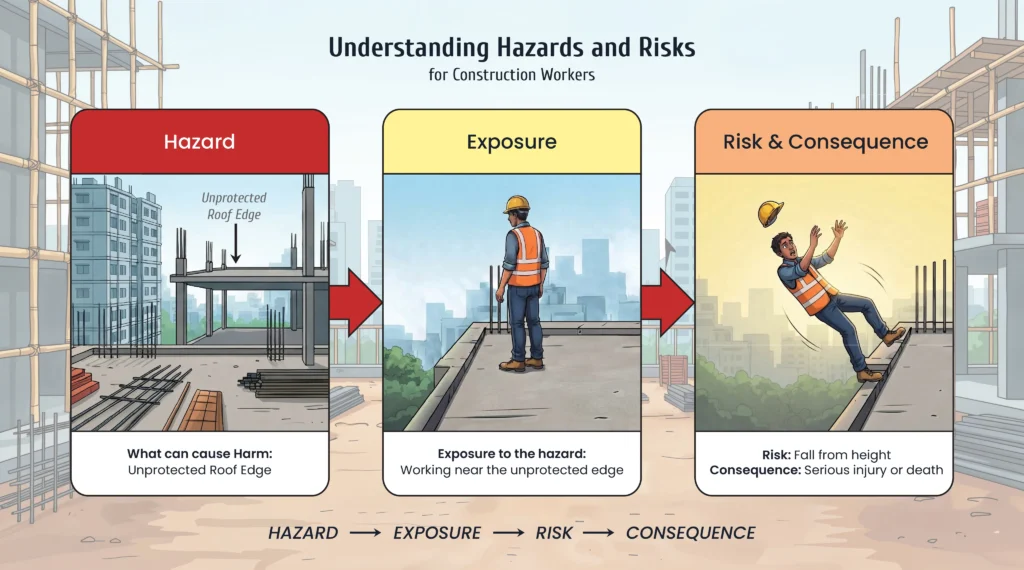
Hazard vs Risk
A hazard is something that can cause harm.
Risk is the likelihood of harm occurring and how serious the consequences could be.
HAZARD → EXPOSURE → RISK → CONSEQUENCE
Hazards Can Change
Construction sites are constantly changing.
A clear walkway can become blocked.
A new machine can enter the work area.
Materials can be lifted overhead.
A new activity can create a new hazard.
A changing site can create changing hazards.
When You Spot a Hazard
Don’t ignore a hazard just because nothing has happened yet.
SEE IT
Recognize what could cause harm.
UNDERSTAND IT
Think about what could happen and who could be affected.
REPORT IT
Tell the responsible person.
CONTROL IT
Make sure appropriate action is taken before someone is harmed.
Quick Hazard Check
Ask yourself:
☐ What can cause harm? ☐ Who could be affected? ☐ How could it happen? ☐ What should be done?
Familiar does not mean safe.
A quick scan today prevents a serious injury tomorrow.