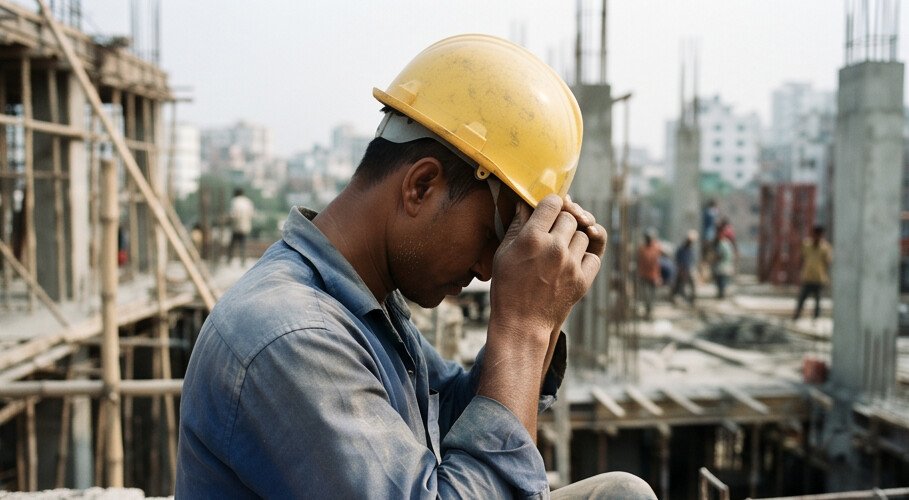
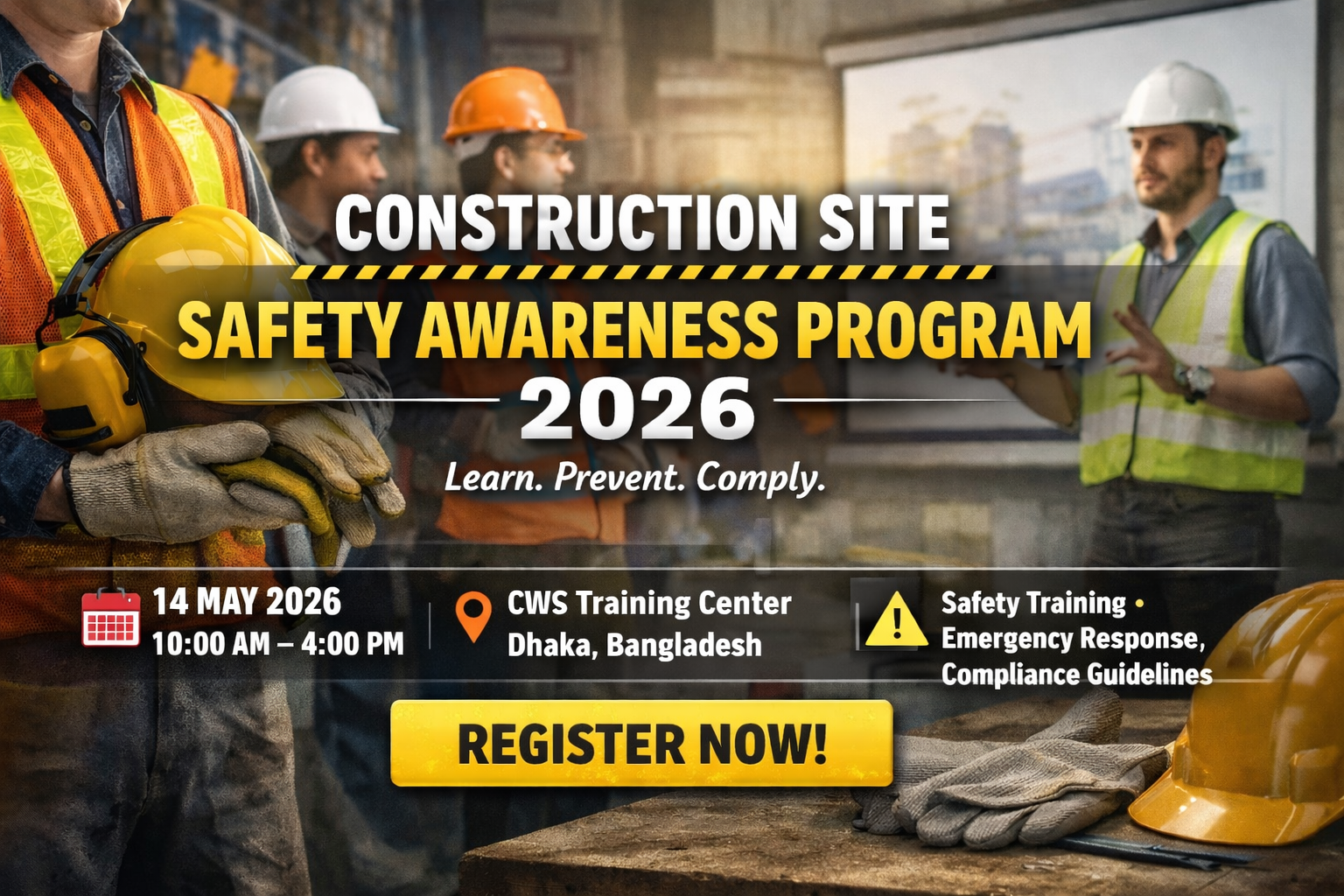
Construction sites are places where people build the spaces around us. But every construction site also comes with risks.
From working at height and operating machinery to electrical hazards, falling materials and unsafe work conditions, a moment of carelessness can change a person’s life.
Safety is not simply about following rules. It is about making sure every worker can return home safely at the end of the day.
A Construction Site Is a Workplace With Risks
Construction involves many different activities happening at the same time.
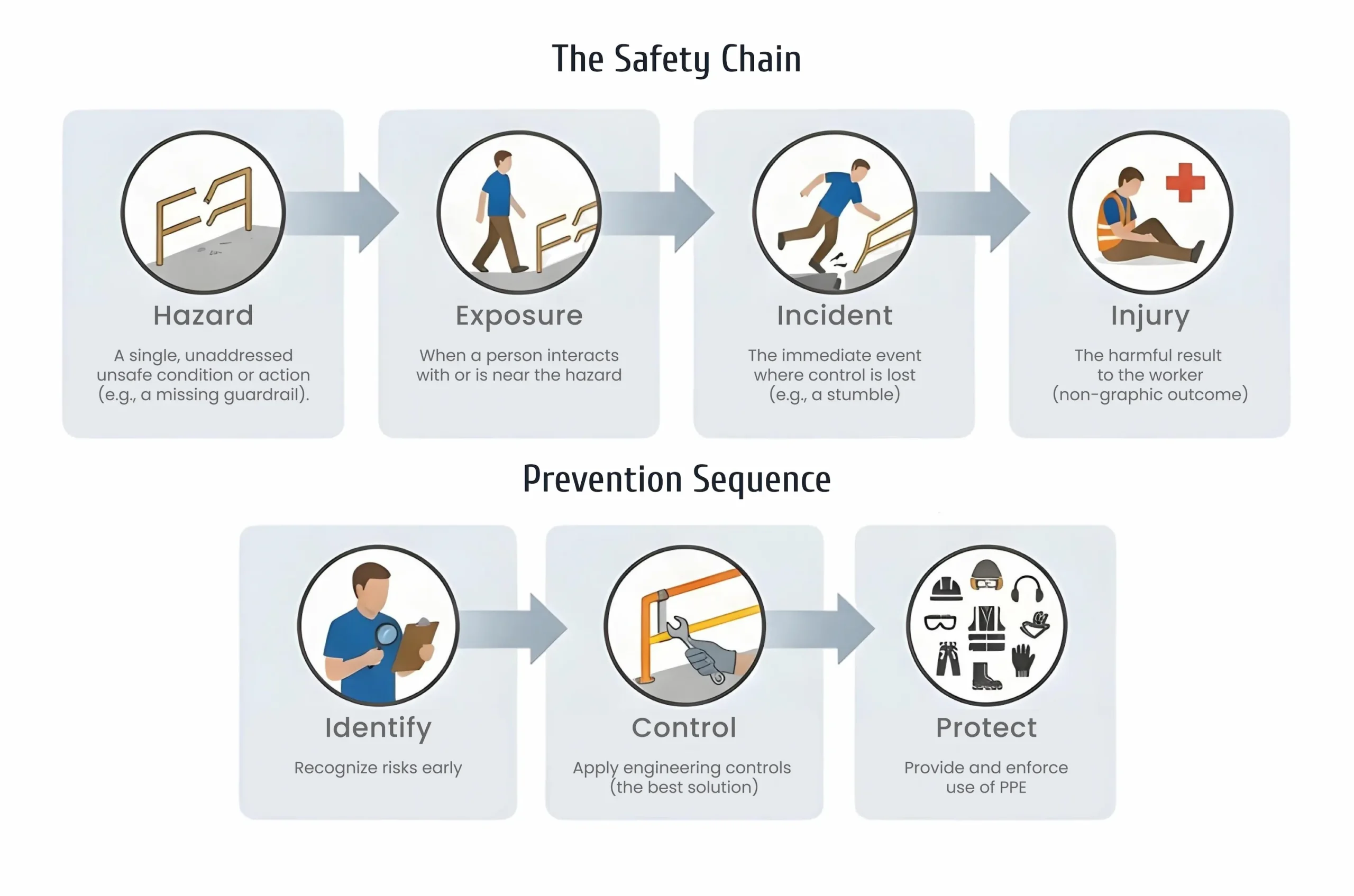
Recognizing a hazard is the first step toward preventing an accident.
Safety Is About People
A construction project is ultimately built by people.
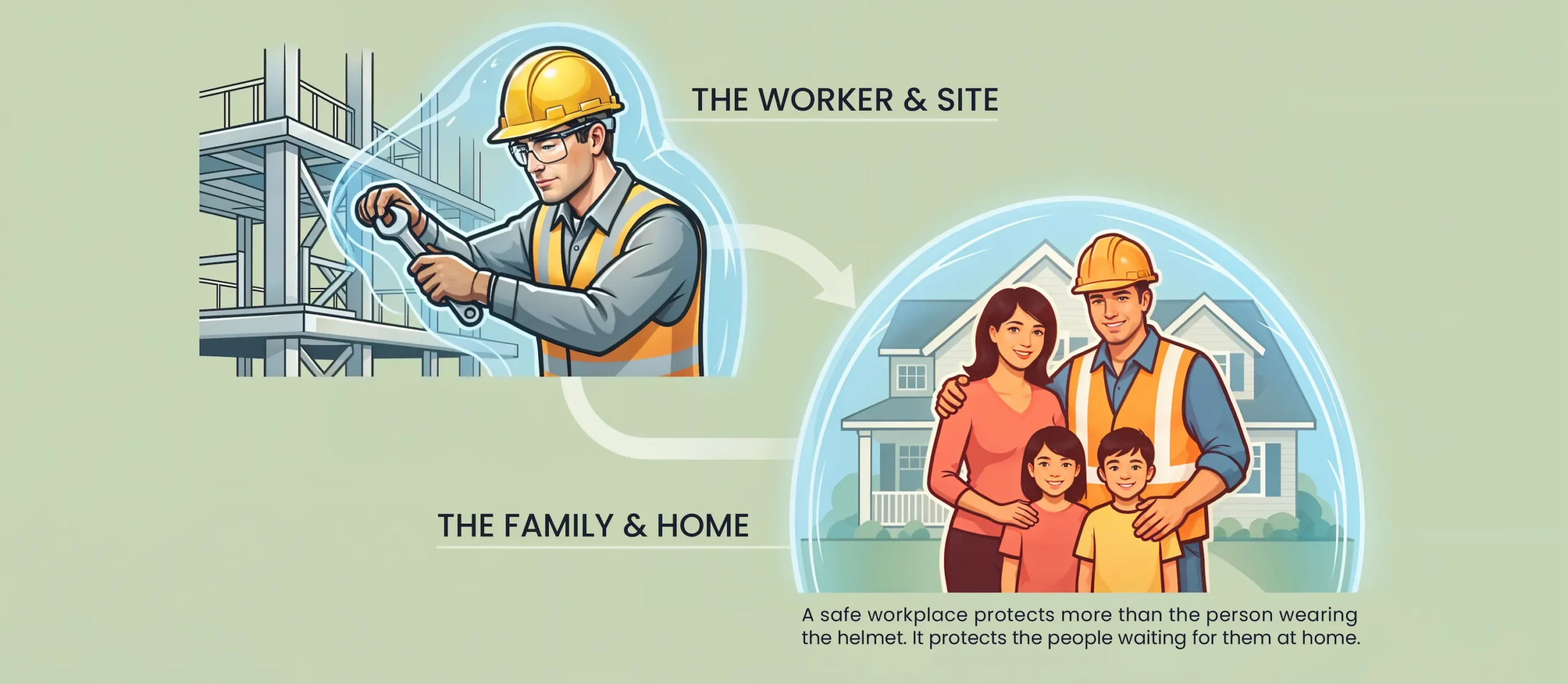
Every worker on site has a family, responsibilities and a life outside the construction site.
A safe workplace protects more than the person wearing the helmet. It protects the people waiting for them at home.
“Behind every worker is a life beyond the construction site.”
Small Risks Can Become Serious Accidents
Many accidents don’t begin with one dramatic mistake.
They can begin with something that seems small:
A missing guardrail
A damaged ladder
A loose electrical cable
Missing / Damaged PPE
Poor housekeeping
An unsecured material
An unsafe shortcut
One overlooked hazard can create a chain of events.
“Prevention Starts With Action”
Safety Is More Than PPE
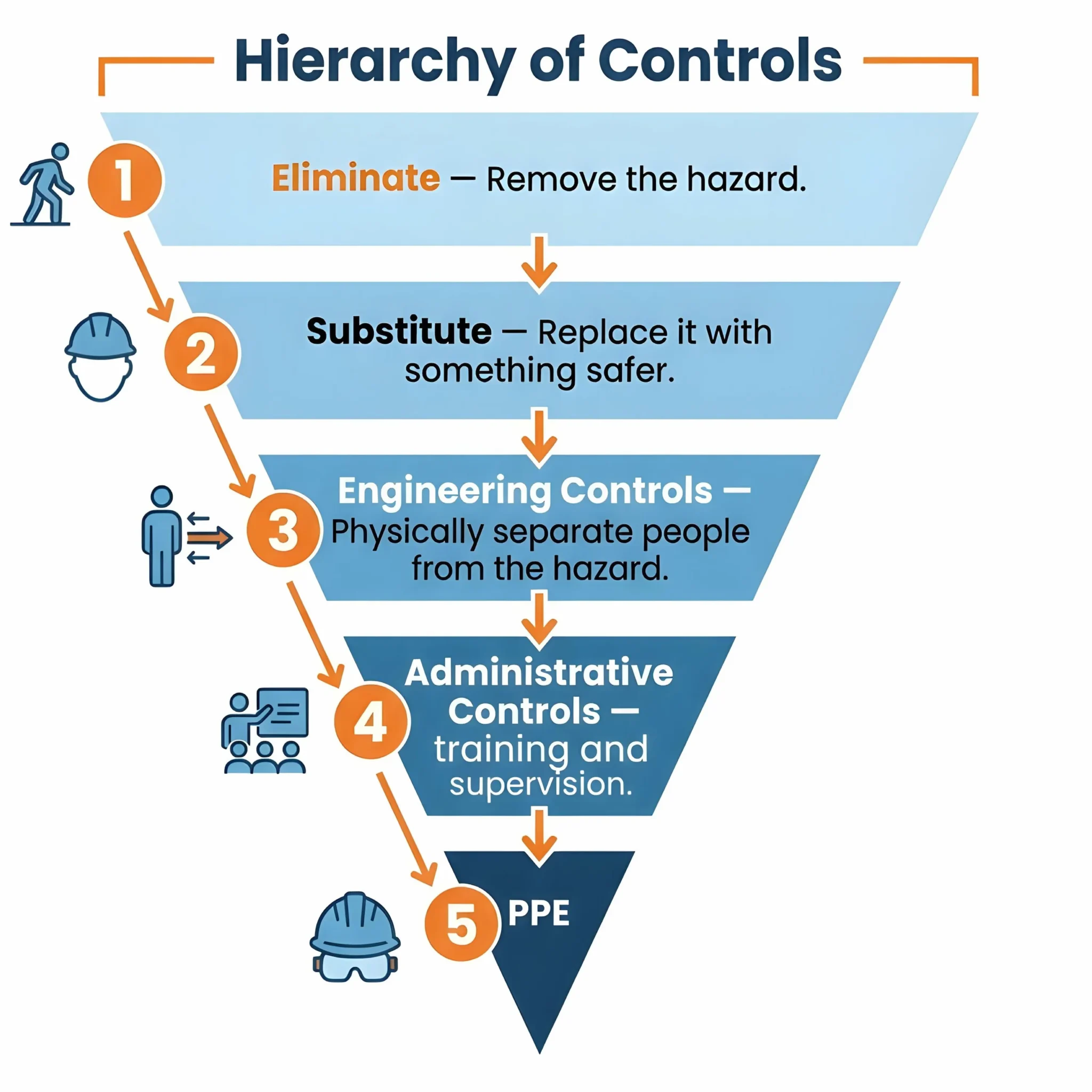
PPE is important, but PPE should not be presented as the entire solution.
A helmet can protect the head. Safety shoes can protect the feet. A harness can help protect a worker from a fall.
But the safest approach is to control the hazard itself whenever possible.
Safety Starts Before the Work
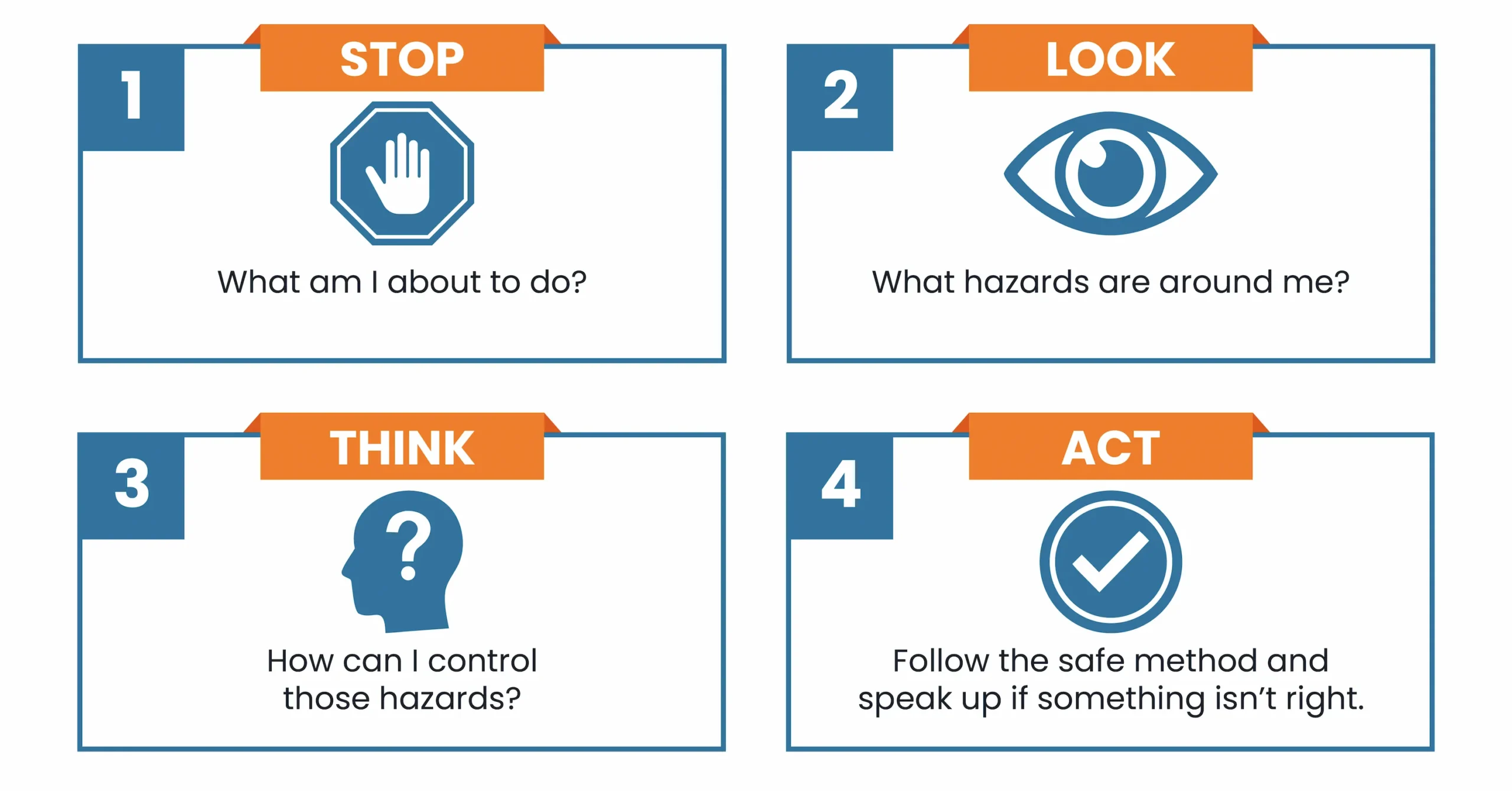
Most workplace accidents happen because workers start a task without taking a few seconds to identify hazards.
Before starting any work, take just 5 seconds to: STOP. LOOK. THINK. ACT.
Everyone Has a Role in Safety
A Safe Site Is a Shared Responsibility.
Worker – Follow safe practices. Report hazards. Use PPE correctly. Supervisor – Identify risks. Communicate instructions. Monitor safe work practices. Engineer / Site Management – Plan safe work. Provide appropriate controls and resources. Organization – Create a culture where safety is part of the work, not an afterthought.
Safety should not be something workers think about only after an accident. It should be part of planning, communication and everyday work.
A worker should feel comfortable saying: “This doesn’t look safe.”
And the response should be: “Let’s make it safe before we continue.”