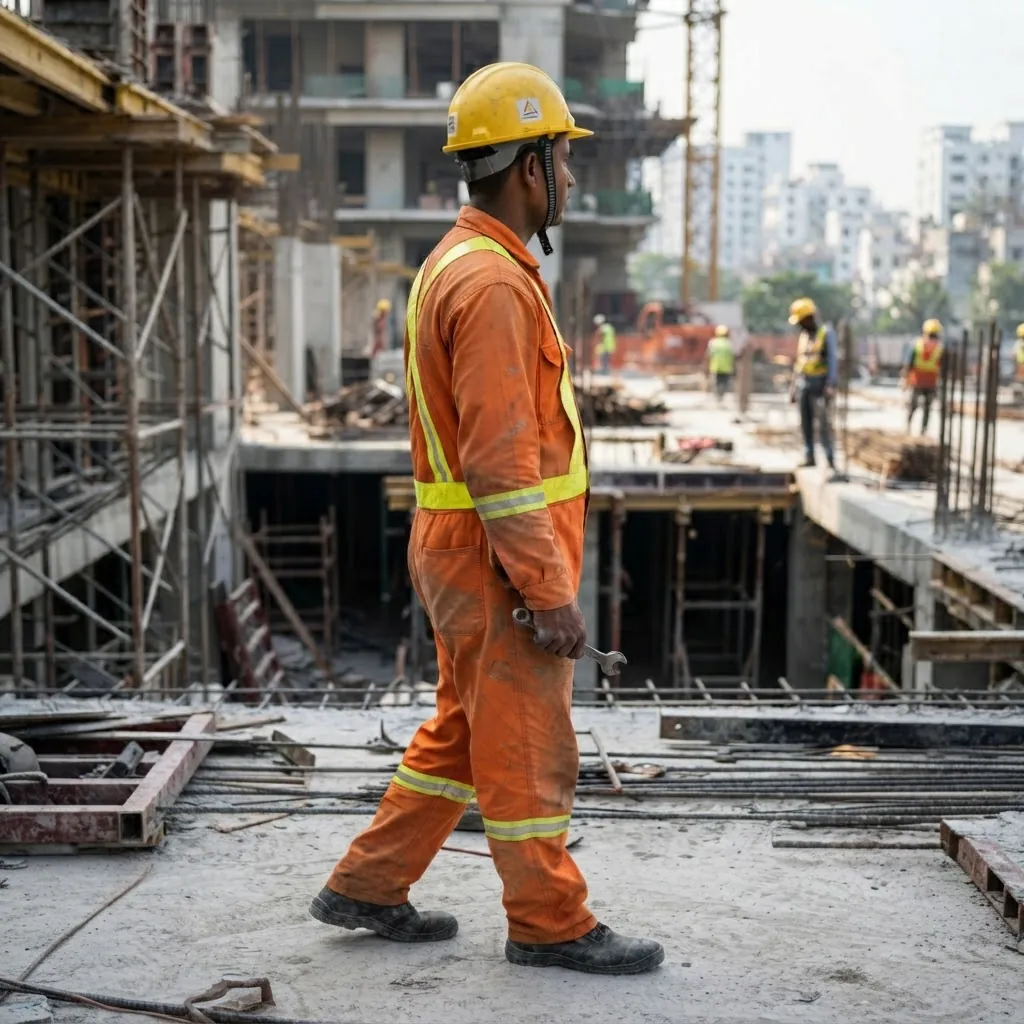
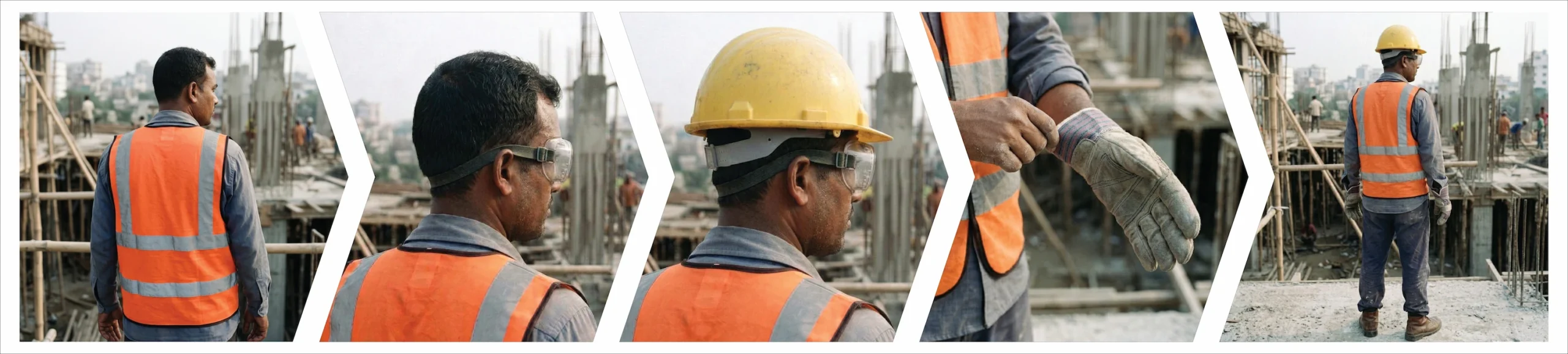
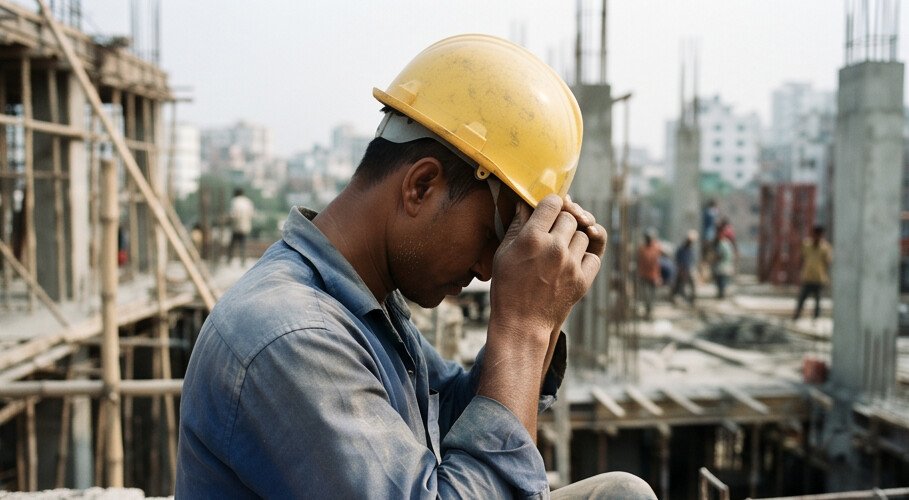
Personal Protective Equipment, or PPE, is designed to reduce a worker’s exposure to hazards that cannot be completely eliminated or controlled in other ways.
On a construction site, different tasks create different risks. A hard hat protects against certain head hazards. Safety footwear protects the feet. Eye protection shields against flying particles and splashes. A harness can help protect a worker from a fall when working at height.
But PPE only works when the right equipment is selected, correctly fitted, properly maintained, and used consistently.
What Is PPE?
PPE means Personal Protective Equipment.
It refers to equipment or clothing worn by a worker to reduce exposure to specific workplace hazards.
PPE is not a replacement for safe working methods or hazard controls. It is one part of a broader safety system.
HAZARD → PROTECTION → WORKER
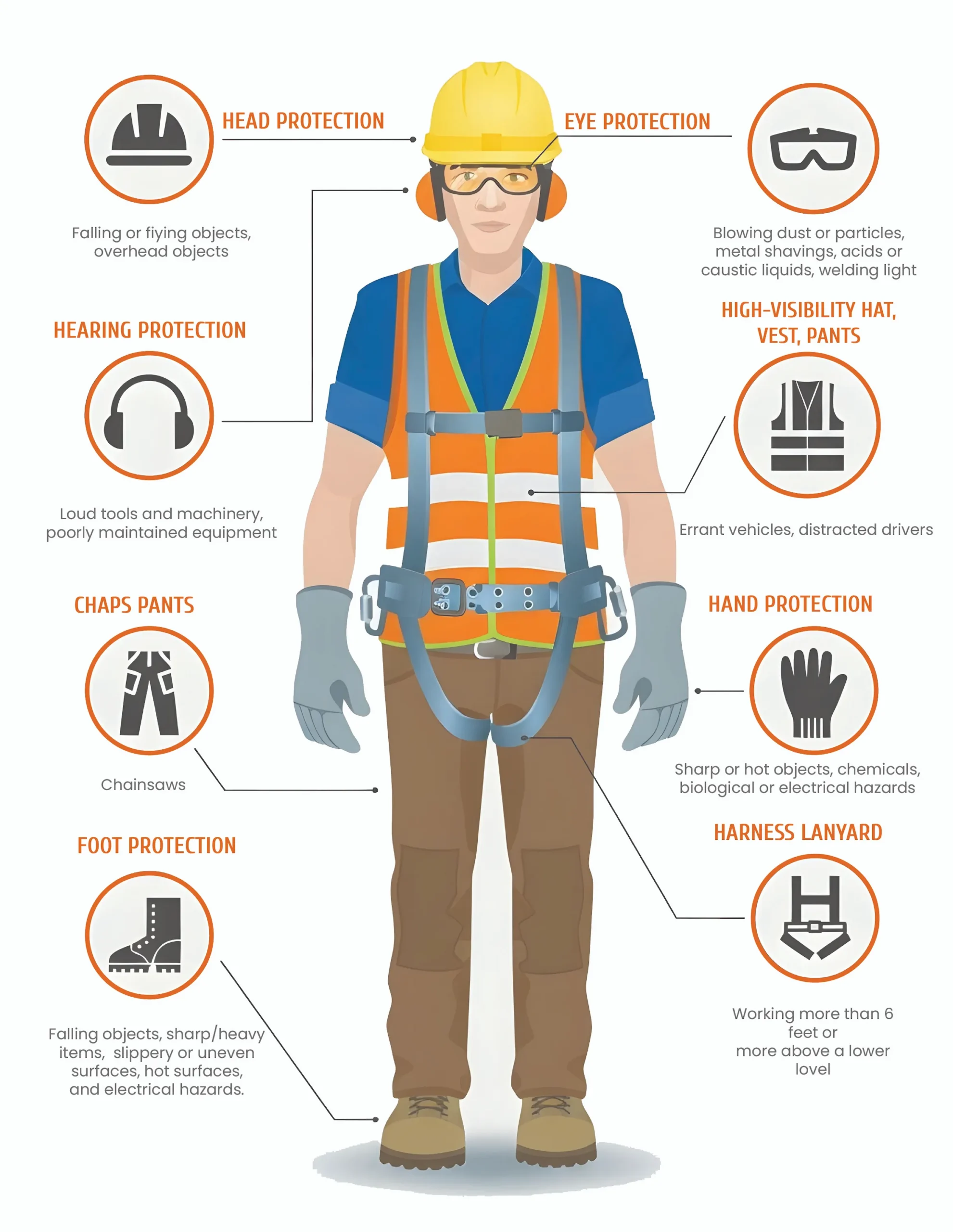
Know Your PPE
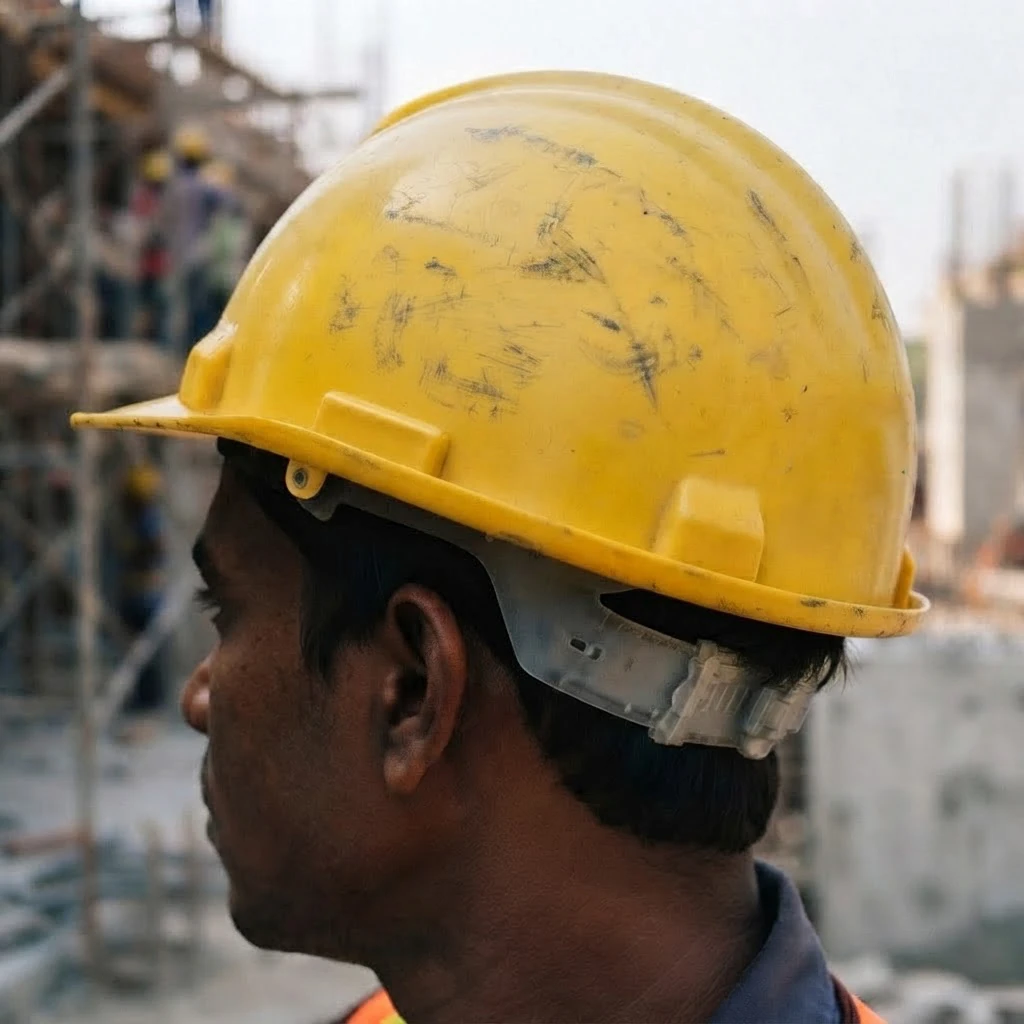
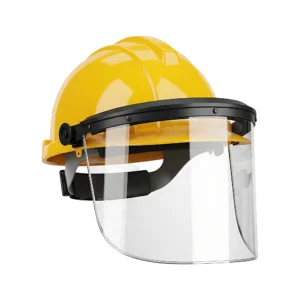
Head Protection
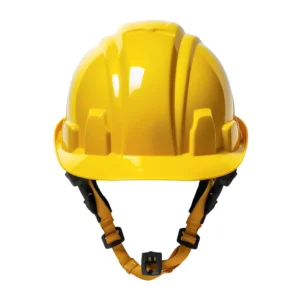
Hard Hat
Helps protect the head from hazards such as falling or moving objects and certain impacts.
Remember: A helmet should be appropriate for the work, correctly adjusted and maintained in good condition.
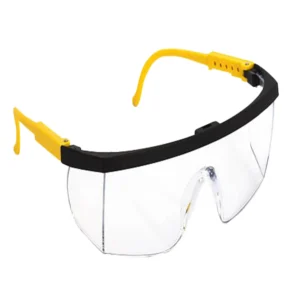
Eye & Face Protection
Safety Glasses / Goggles / Face Shield
Protect the eyes and face from hazards such as flying particles, dust, chemical splashes or other task-specific risks.
Remember: Choose protection according to the hazard. Ordinary glasses are not necessarily safety glasses.
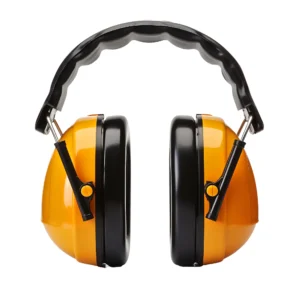
Hearing Protection
Earplugs / Earmuffs
Used where workers are exposed to hazardous levels of noise.
Remember: Hearing damage can happen gradually and may not be immediately noticeable.
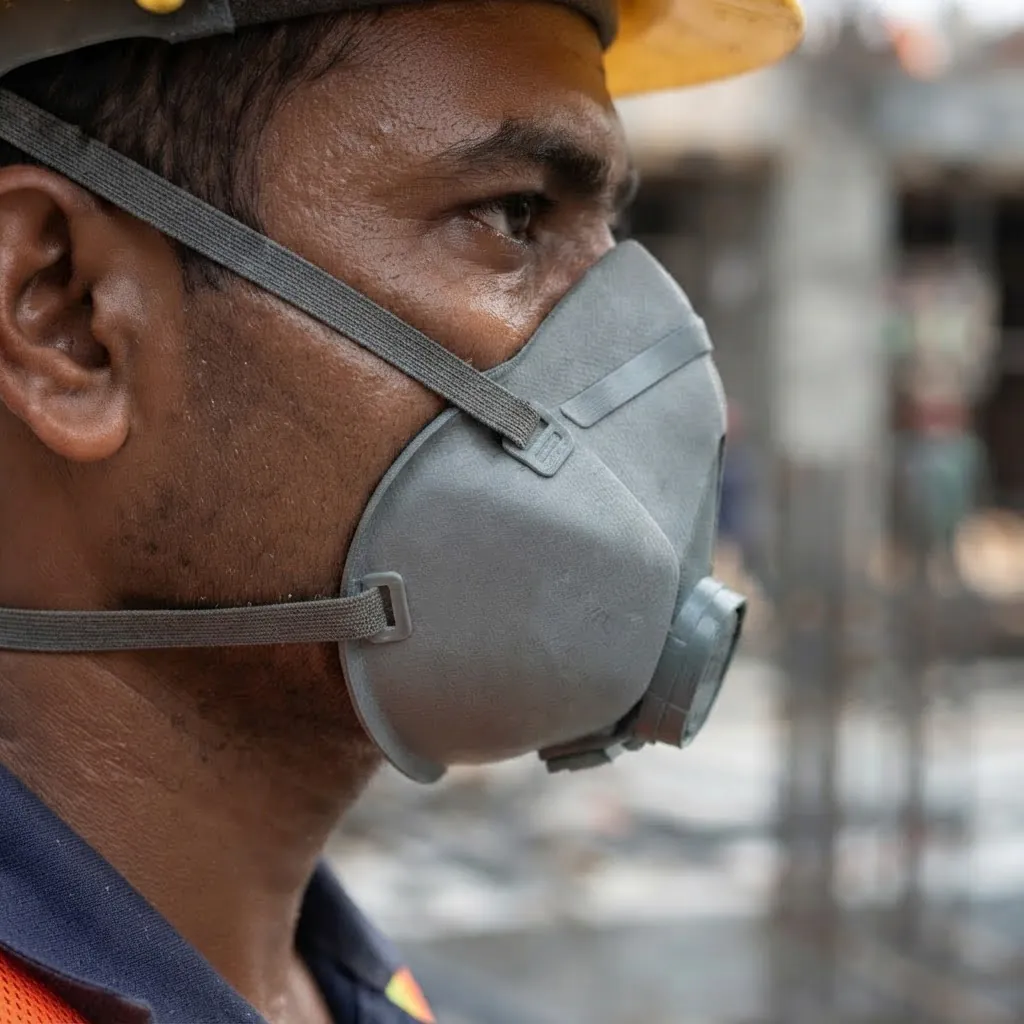
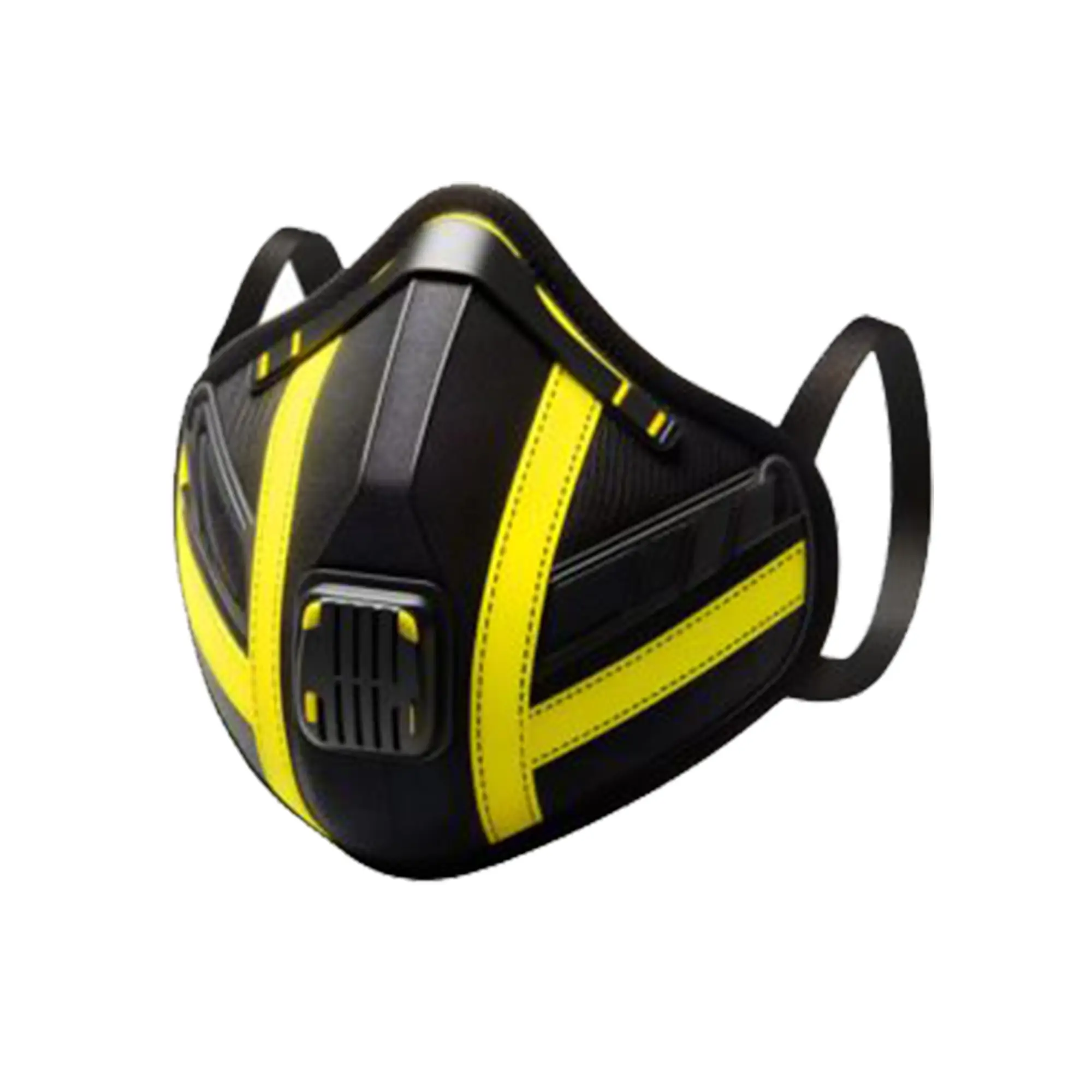
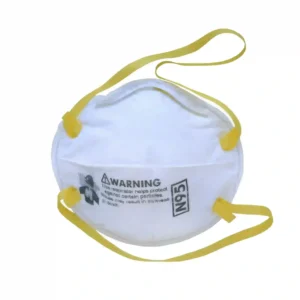
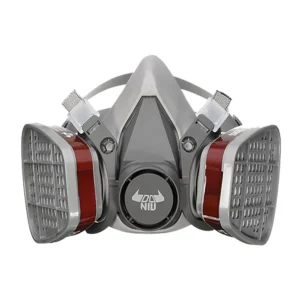
Respiratory Protection
Respirators / Masks
Used when workers may be exposed to harmful dust, fumes, vapors or other airborne contaminants.
Remember: The type of respiratory protection must match the hazard. A simple dust mask is not suitable for every airborne hazard.
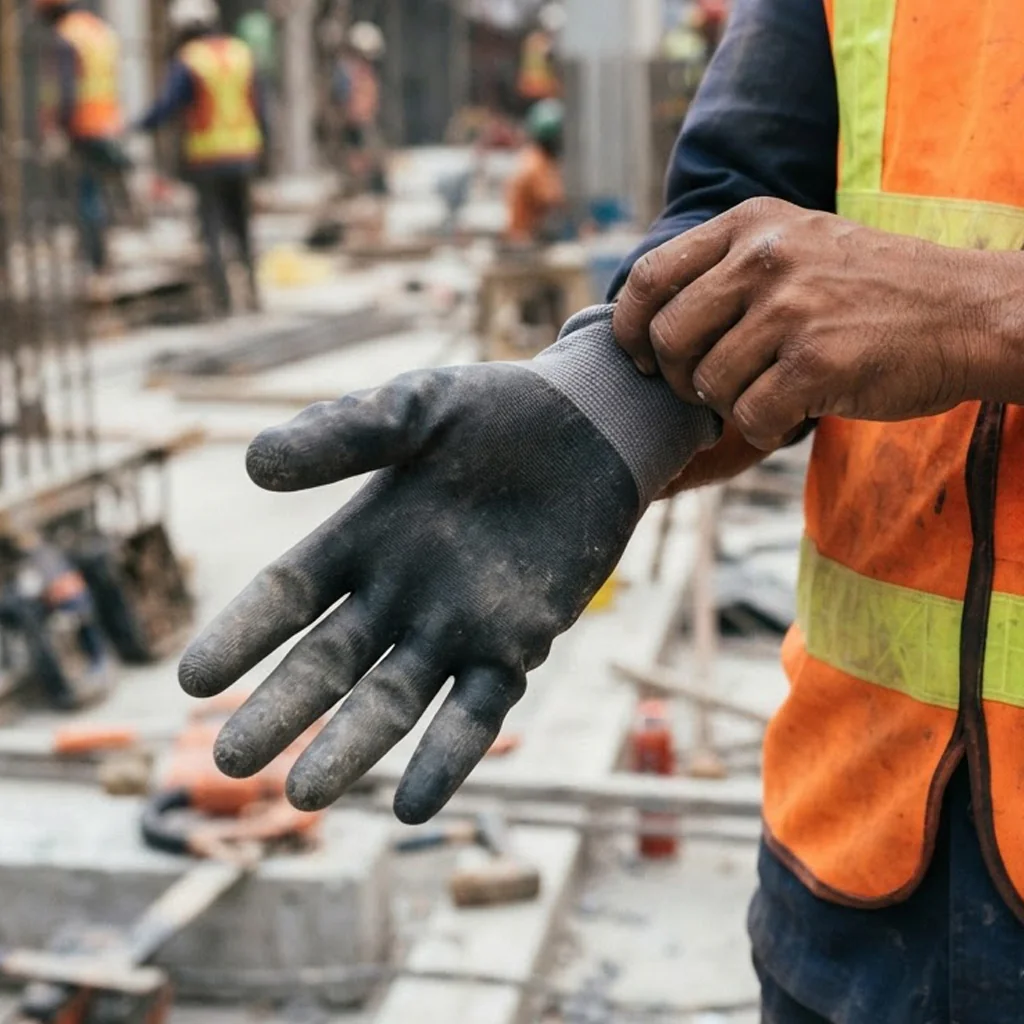
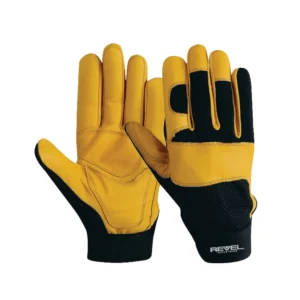
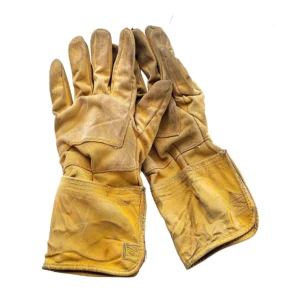
Hand Protection
Safety Gloves
Different gloves provide protection against different hazards, including cuts, abrasion, heat, chemicals or certain mechanical risks.
Remember: There is no single glove that protects against every hazard.
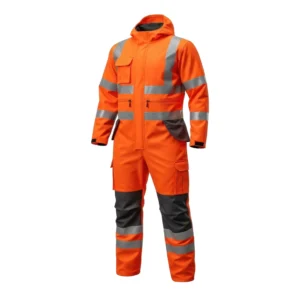
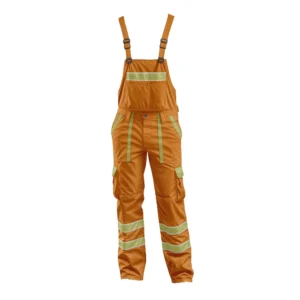
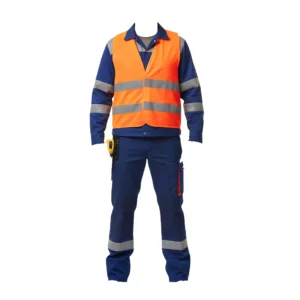
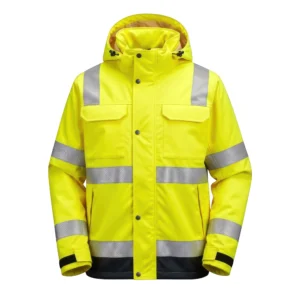
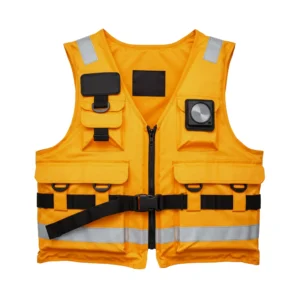
Body Protection
High-Visibility Vest / Protective Clothing
Helps workers remain visible and can provide protection against specific workplace hazards depending on the clothing selected.
Remember: Protective clothing should be appropriate for the task and environment.
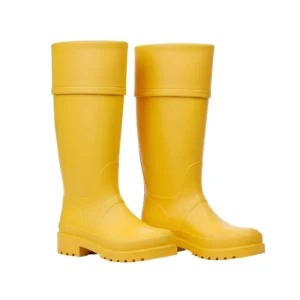
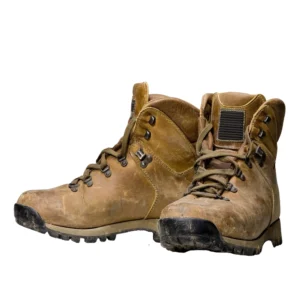
Foot Protection
Safety Boots / Shoes
Help protect feet from hazards such as impact, penetration and certain environmental conditions.
Remember: Select footwear according to the hazards present on the site.
Fall Protection
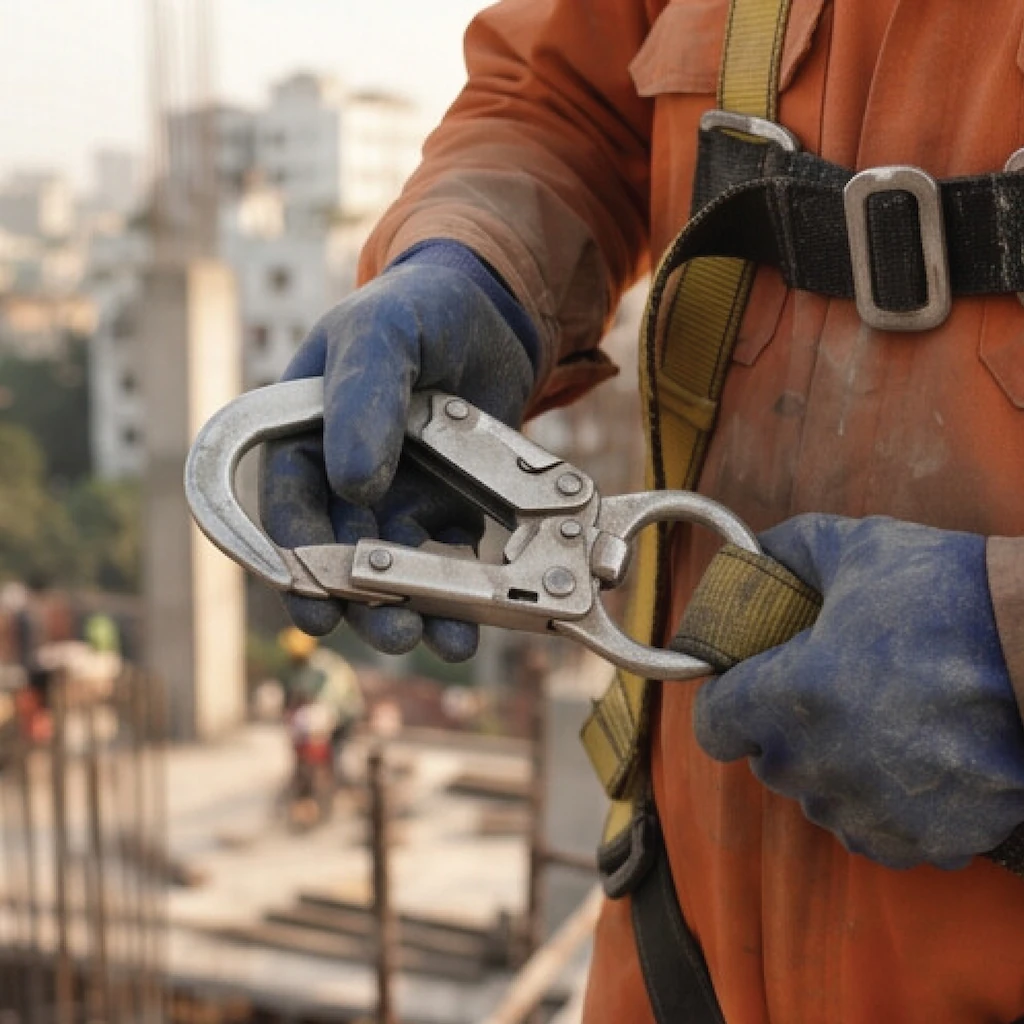
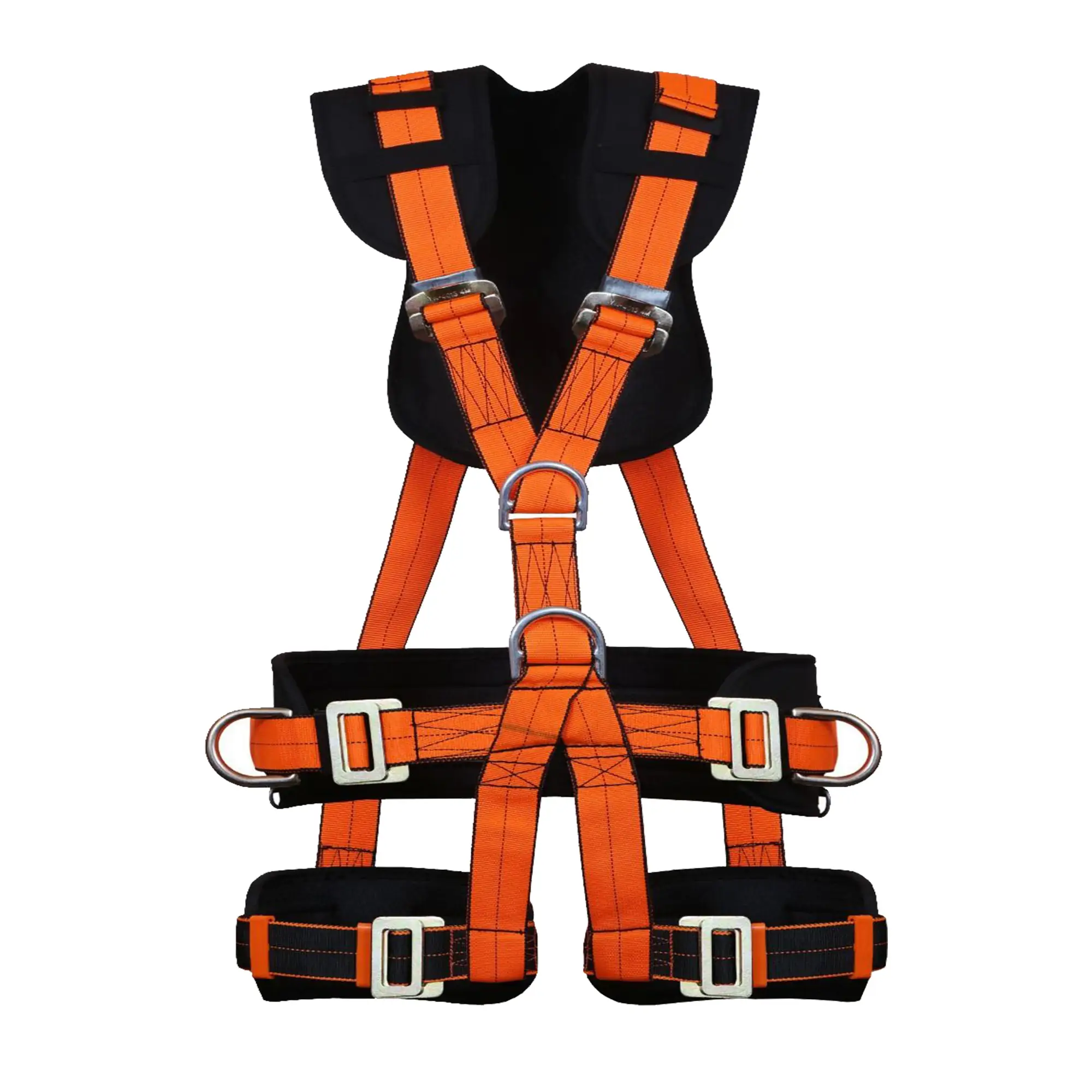
Harness + Connecting System
Used as part of an appropriate fall-protection system when working at height.
Remember: A harness alone does not make working at height safe. The complete system, including suitable anchorage and connection, must be properly selected, inspected and used.
PPE Depends on the Job
Not every worker needs the same PPE.
The correct PPE depends on:
The task
The hazard
The work environment
The equipment being used
The duration of exposure
The applicable safety requirements
Working at Height
Safety Helmet
Safety Footwear
Full-Body Safety Harness
High-Visibility Vest
Cutting & Grinding
Safety Goggles
Face Shield
Hearing Protection
Protective Gloves
Dust Respirator
Concrete Work
Chemical-Resistant Gloves
Waterproof Safety Boots
Safety Goggles
Protective Clothing
Dust Respirator
Working Around Heavy Equipment
Safety Helmet
High-Visibility Vest
Safety Boots
Hearing Protection
Safety Goggles
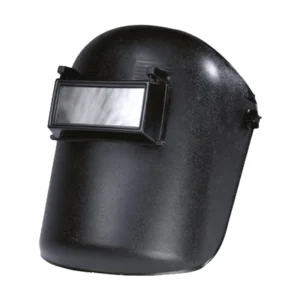
Weilding & Hot Work
Welding Helmet
Welding Gloves
Flame-Resistant Jacket
Safety Boots
Respirator
Hearing Protection
Drilling & Dust Producing Work
Safety Goggles
Hearing Protection
Dust Respirator
Protective Gloves
Safety Boots
Material Handling
Protective Gloves
Safety Boots
Safety Helmet
High-Visibility Vest
Safety Goggles
Electrical Work
Insulating Gloves
Arc-Rated Face Shield
Arc-Rated Protective Clothing
Electrical Safety Boots
Fit & Inspect Your PPE
PPE can only provide effective protection when it is suitable for the task, fits correctly and is in good condition. Before starting work, take time to adjust and inspect each item.
FIT YOUR PPE
Make sure every item is properly adjusted and comfortable to wear.
Helmet: Adjust the suspension and chin strap where required.
Eye Protection: Ensure glasses or goggles fit securely and provide adequate coverage.
Protective Clothing: Secure vests, jackets and fasteners properly.
Gloves: Choose the correct size and ensure a comfortable fit.
Safety Footwear: Check that footwear fits properly and is suitable for the task.
Safety Harness: Adjust straps and buckles according to the manufacturer’s instructions.
PPE Is Not a Substitute for Safety
PPE is the last line of defense.
If a hazard can be eliminated or controlled through safer design, engineering controls, barriers, procedures or other measures, those controls should be considered first.
For example:
Unsafe edge
❌ Don’t rely only on a harness.
✅ Provide appropriate edge protection where possible.
Dust-producing task
❌ Don’t rely only on a mask.
✅ Control dust at the source where possible, then use appropriate respiratory protection when required.
PPE Checklist: Before You Start
☐ Do I have the correct PPE for this task? ☐ Is my PPE in good condition? ☐ Does it fit correctly? ☐ Do I know how to use it? ☐ Have I checked my connections and fasteners? ☐ Is additional protection required for this task? ☐ Have I reported damaged or unsuitable PPE?
Wear it. Check it. Use it correctly.
Because PPE isn’t just something you wear on a construction site. It is part of working safely.